
Did you know nearly two-thirds of American homes could save on their bills by switching energy providers? The power market has changed, moving from one utility to a competitive field. Now, you can pick who powers your home.
Understanding residential electricity plans is key to controlling your budget. With deregulation, companies offer different rates and terms. It might seem complex, but it’s a smart way to save money.
Learning about power delivery and billing helps you avoid extra costs. We’re here to make it easier. Let’s find the best deal for your area and save you money each month.
Key Takeaways
- Deregulation lets you choose your energy supplier in many states.
- Comparing offers can lead to big monthly savings.
- Always check the fine print for contract lengths and cancellation fees.
- Fixed-rate options protect you from price hikes.
- Choosing your energy means you’re in control.
Key Factors for Understanding Residential Electricity Plans
You have many ways to pay for electricity, each with its own benefits. When you start choosing electricity rates, it’s good to know how different plans affect your budget. Learning about these models helps you manage your monthly costs and find a plan that suits your lifestyle.
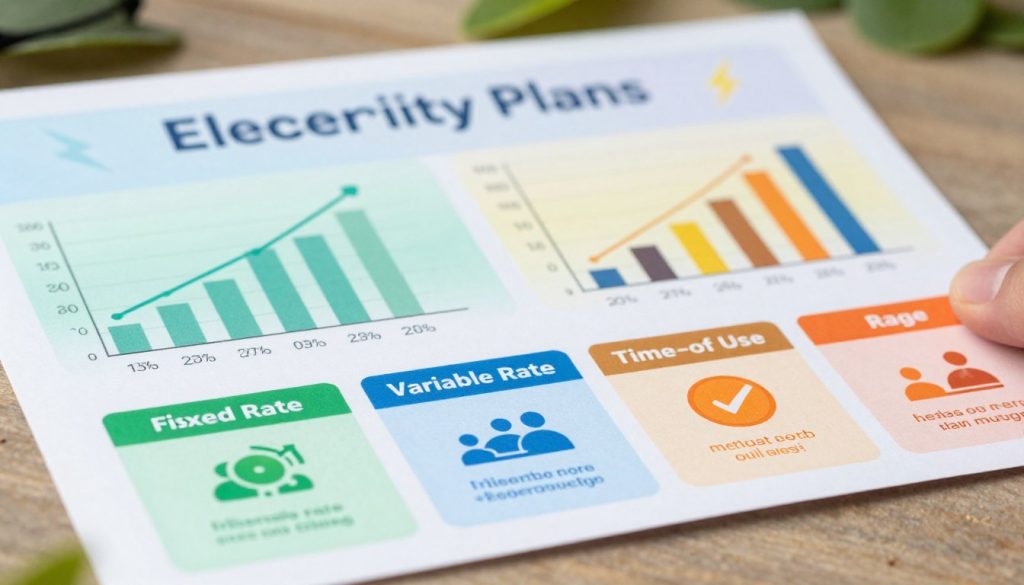
Fixed-Rate Plans
A fixed-rate plan gives you peace of mind by keeping your price the same for your contract’s length. Your rate won’t change, even if prices go up during extreme weather or high demand. It’s a great choice if you like predictable monthly bills and don’t want surprises.
Variable-Rate Plans
Variable-rate plans offer a chance to save money if you’re okay with some uncertainty. Your rate changes with the market, so you might pay less when energy is cheap. But, your costs can go up fast during high demand times, making these plans better for those who watch the market closely.
Time-of-Use Plans
Time-of-use plans reward you for using your appliances wisely. You pay less during off-peak hours, like late at night or early morning. By moving big energy tasks to these times, you can significantly lower your bill.
Prepaid Electricity Options
Prepaid electricity options offer great flexibility for your home. You pay for your power upfront, so you don’t need long-term contracts, credit checks, or big deposits. This is a convenient way to manage your budget without worrying about unexpected bills.
| Plan Type | Best For | Price Stability | Flexibility |
|---|---|---|---|
| Fixed-Rate | Budget Planning | High | Low |
| Variable-Rate | Market Savvy | Low | Medium |
| Time-of-Use | Energy Savers | Medium | Medium |
| Prepaid | Short-term Needs | Variable | High |
Essential Tips for Comparing Utility Providers
Mastering the art of comparing utility providers can help you control your monthly bills. It’s not just about finding the cheapest rate. By following a structured approach, you can find a plan that suits your lifestyle and budget.
Checking Your Monthly Energy Usage
Before signing up for a new service, understand your past energy use. Reviewing your energy use over the last year is the best way to predict your future needs. Most companies provide this data through your online account.
Look for seasonal usage spikes, like high cooling costs in summer or heating in winter. Accurate data helps you choose between flat-rate or usage-based plans. This step is key to a successful energy plan comparison.
Evaluating Contract Terms and Cancellation Fees
The fine print in residential energy contracts can affect your wallet. Always check for early termination fees before committing to a long-term deal. These fees can be high if you switch providers before your contract ends.
Be aware of rate changes after promotional periods end. Some companies raise rates significantly after the initial offer. Knowing these residential energy contracts details helps avoid unexpected charges.
Identifying Renewable Energy Incentives
Many homeowners want to support green initiatives. Look for providers with renewable energy incentives by checking their “green” options. These plans often use wind, solar, or hydroelectric power.
Choosing a sustainable plan reduces your carbon footprint. Use the table below to compare key features of different providers.
| Feature | Standard Plan | Green Energy Plan | Prepaid Option |
|---|---|---|---|
| Contract Length | 12-24 Months | 12-36 Months | No Contract |
| Rate Type | Fixed | Fixed or Variable | Variable |
| Renewable Source | Minimal | 100% Certified | Varies |
| Cancellation Fee | High | Moderate | None |
By thoroughly comparing energy plans, you can balance cost, flexibility, and environmental impact. Staying informed ensures your energy choice remains a smart investment for years.
Conclusion
You have the power to control your utility costs. Making smart electric service choices is key to saving money. It helps keep your budget safe from high prices.
Managing your household power plans is an ongoing task. The market and your energy needs change over time. Your lifestyle evolves, so your energy use does too.
Remember to check your current agreement every year. This simple step keeps your rate in line with your energy use. Companies like Reliant Energy or TXU Energy often change their plans to include new tech and green energy.
Now, you can confidently move through the energy market. Stay ahead of your monthly bills by being proactive. Your efforts will lead to financial stability for your home in the long run.