Author: admin

  • Building a Resume for Remote Job Applications to Get Hired

    Building a Resume for Remote Job Applications to Get Hired

    Switching to a remote job is more than just updating your contact info. When you’re creating a resume for virtual job applications, focus on digital skills. Forget about old office metrics.

    Hiring managers today want to see you can work well outside a cubicle. By strategically highlighting your ability to work independently, you boost your chances of getting hired.

    Learning to build a resume for remote job applications makes your profile stand out. We’ll show you how to highlight your tech skills and self-management. This way, you’ll catch the eye of recruiters.

    Key Takeaways

    • Emphasize digital communication skills to prove you can collaborate across time zones.
    • Highlight your history of independent work to build trust with employers.
    • Tailor your professional summary to reflect a results-oriented mindset.
    • Use specific keywords that align with modern virtual workplace requirements.
    • Showcase your proficiency with collaboration tools like Slack, Zoom, or Trello.

    Essential Strategies for Building a Resume for Remote Job Applications

    Learning how to make a great remote job application resume is key to getting your dream job online. Employers look for signs that you can work well without being watched all the time. By making your resume fit the remote job needs, you show you’re ready for the unique challenges of working from anywhere.

    A well-organized desk setup featuring a stylish laptop open to a digital resume document, highlighting key sections like experience and skills tailored for remote job applications. In the foreground, a neatly arranged notepad with handwritten notes and a professional pen sits beside a small potted plant, adding a touch of nature. The middle ground focuses on a character dressed in smart casual attire, reviewing their resume with a thoughtful expression. The background shows a bright and airy home office space, with soft, natural light streaming in through a window, creating a warm and inviting atmosphere. The image conveys a sense of professionalism, motivation, and readiness for remote work opportunities.

    Highlighting Asynchronous Communication Skills

    Working in a team spread out over different time zones is common. Crafting a remote work resume means showing you can write clearly. Share times when you documented steps or gave detailed updates to keep projects moving without needing to meet in person.

    It’s important to show you can explain complex ideas through emails, project management tools, or wikis. Talk about your experience with tools like Notion or Confluence. This shows you know that effective documentation is key to successful remote teamwork.

    Emphasizing Self-Motivation and Autonomy

    Remote managers want people who take charge of their work. When applying these remote work resume tips, focus on what you’ve achieved, not just how long you worked. Use action verbs to describe how you managed your time to meet deadlines on your own.

    Show that you can work well without someone watching over you. Highlight times when you found a problem and fixed it without waiting for orders. This proactive approach is what remote managers look for.

    Showcasing Proficiency with Remote Collaboration Tools

    Your tech skills are important in your application. When following telecommuting resume tips, list the tools you’ve used to work with teams worldwide. Mention specific software like Slack, Zoom, or Trello, and how well you use it.

    The table below shows how to focus on skills needed for remote work instead of office work:

    Skill Category Traditional Focus Remote-Ready Focus
    Communication Verbal/In-person Asynchronous/Written
    Task Management Manager-led Self-directed/Tools
    Collaboration Meeting-heavy Digital/Cloud-based
    Reliability Office attendance Output/Deadlines

    By using these telework resume best practices, you show you’re ready for the digital workplace. Focus on these areas to make your resume stand out in the competitive remote job market.

    Key Elements to Include in Your Virtual Job Resume

    Starting your journey to a remote job means having a resume that shows you’re great for working from anywhere. Your remote job application resume should clearly show you’re comfortable working outside a traditional office.

    Professional Summary Focused on Telecommuting Success

    Your summary is the first thing a hiring manager sees. Make it count by showing you’re good at managing your time and getting things done without supervision.

    Talk about your experience with remote projects. This shows you’re dependable and know how to work from home.

    Technical Skills Section Tailored for Distributed Teams

    Your remote job application cv should highlight your tech skills. List tools you use to work with teams from different places.

    • Project management platforms like Asana or Trello.
    • Communication tools such as Slack or Microsoft Teams.
    • Cloud-based document sharing systems like Google Workspace.

    Quantifiable Achievements in Remote Environments

    Numbers can tell a powerful story about your work. Use these telecommuting resume tips to show your productivity while working remotely.

    For example, you could say you made your team 20% more efficient with better digital tools. Quantifiable data shows you can work well on your own.

    Certifications Relevant to Digital Workflows

    When making a resume for virtual jobs, include relevant certifications. These show you know how to manage digital workflows and keep things secure.

    Highlight certifications that show you’re good with cloud-based systems. This tells employers you’re ready to start right away.

    Clear Contact Information and Time Zone Availability

    Recruiters need to know how to reach you. Always include your city and time zone to avoid scheduling mix-ups.

    Being open about your availability shows you’re proactive and organized. This makes it easier for teams around the world to work with you.

    Conclusion

    Your journey to a flexible career begins with a resume that speaks to remote teams. By using these tips, you become a top choice for companies like Slack and Zoom. Showing you’re tech-savvy makes you stand out in a busy job market.

    Building a virtual job resume means seeing your career differently. Focus on what you’ve achieved, not where you were. This makes your resume a strong tool for showing your worth to employers.

    Keeping your resume consistent is key. Following best practices keeps it current with new tech. Update it to show your skills with tools like Asana or Notion.

    Creating a remote work resume is a journey that grows with your career. Show off your skills and independence. Your next big step is closer when you share your experience clearly and with purpose.


    FAQ

    How do I start building a resume for remote job applications effectively?

    When starting a resume for remote jobs, focus on digital skills first. Unlike regular jobs, remote work requires showing you can work alone and manage time well. Highlight your experience with team projects online to show you’re ready for virtual work.

    What are the most important telecommuting resume tips for communication?

    For remote jobs, it’s key to show you’re good at asynchronous communication. Use tools like Slack to keep in touch with team members across different time zones. Being able to write clear, concise documents is also a big plus.

    How can I showcase my technical skills on a remote job application cv?

    To stand out, add a section for technical skills for remote teams. List your experience with tools like Asana and Google Workspace. This shows you’re ready to work remotely from the start.

    Should I include my specific location when crafting a remote work resume?

    Even if the job is remote, mention your time zone. This helps recruiters at places like Zapier see how you fit with the team. Include your city and state, but your time zone is more important for scheduling.

    What are the telework resume best practices for highlighting achievements?

    Focus on achievements you’ve made in remote work. Instead of just listing tasks, talk about how you improved team efficiency or met targets alone. For example, you could mention a project in Notion that boosted output by 15%.

    Why is virtual job resume building considered an ongoing process?

    Building a resume for virtual jobs is always changing. As you learn new tools or get certifications, update your resume. This keeps your profile competitive for new remote job opportunities.
  • Project Management Skills for Career Growth Success

    Project Management Skills for Career Growth Success

    Did you know that nearly 70% of high-performing employees attribute their rapid advancement to mastering specific organizational workflows? In today’s fast-paced corporate landscape, staying ahead requires more than just technical expertise. You must cultivate a unique blend of leadership and coordination abilities to remain competitive.

    Developing these professional competencies is no longer optional; it is a vital necessity for anyone aiming to climb the ladder. By refining how you handle complex tasks, you transform into a high-value asset that organizations fight to retain. True success comes when you align your daily output with broader business objectives.

    Mastering these essential traits directly influences your long-term job satisfaction and earning capacity. You will find that when you lead with clarity, your influence within the office expands naturally. Let us explore how you can sharpen these core areas to unlock your full capacity.

    Key Takeaways

    • Understand why organizational expertise is essential for modern advancement.
    • Learn how to position yourself as a high-value asset in your company.
    • Discover the link between leadership abilities and long-term job satisfaction.
    • Identify the core competencies needed to thrive in a competitive environment.
    • Gain actionable insights to effectively climb the corporate ladder.

    Why Mastering Project Management Skills for Career Growth Matters

    You might wonder why Project Management Skills for Career Growth are key today. The work world is changing fast. Now, it’s not just about doing tasks. It’s about how your work helps the whole company.

    A modern office environment bustling with activity, showcasing a diverse group of professionals engaged in project management discussions. In the foreground, a confident woman in a tailored suit stands at a whiteboard, pointing at a colorful project timeline, while a man in business casual attire takes notes. The middle layer features team members collaborating around a table filled with laptops, documents, and coffee cups, highlighting teamwork and communication. The background shows a bright, open office space with large windows allowing natural light to flood in, creating an inspiring atmosphere. The mood is focused and energizing, emphasizing career growth and the importance of mastering project management skills. The scene captures a professional yet approachable ambiance, ideal for illustrating success in project management.

    The Evolving Role of the Modern Project Manager

    Before, project managers just tracked tasks and schedules. Now, they are strategic partners linking business goals to team actions. This change is key for project manager career development.

    Today, leaders want you to make big decisions that match company goals. You must handle uncertainty and use resources wisely. Here’s how expectations have changed:

    Feature Traditional Role Modern Role
    Primary Focus Task Completion Strategic Value
    Decision Making Follows Process Data-Driven Insight
    Communication Status Updates Stakeholder Influence

    How Strategic Planning Impacts Your Professional Trajectory

    Planning strategically shows you’re ready for the top. If you can spot risks and align projects with big goals, leaders notice. This is key for your project manager career development.

    “Leadership is the capacity to translate vision into reality.”

    — Warren Bennis

    Improving your Project Management Skills for Career Growth makes you essential. You go from being part of the team to driving its success. This change means your hard work is valued and seen as key to the company’s growth.

    Essential Project Management Skills to Elevate Your Resume

    To make your resume stand out, focus on the essential project management skills that employers want. Knowing the technical side is important, but it’s how you use these skills that really matters. By mastering these skills, you show you can handle tough challenges in any organization.

    Mastering Effective Communication and Stakeholder Management

    Good communication is key to a project’s success. You need to turn complex data into clear actions for all stakeholders. Active listening and open reporting build trust and keep everyone on the same page.

    Developing Advanced Risk Mitigation and Problem-Solving Abilities

    To improve project management skills, anticipate problems before they happen. Creating backup plans helps keep your project on track and within budget. When issues do come up, solving them calmly keeps your team focused and productive.

    Refining Time Management and Resource Allocation Techniques

    Being efficient is a sign of a top-notch project manager. Learn to use tools that track progress and manage team resources well. This way, you avoid burnout and make sure everyone is working to their best.

    Cultivating Emotional Intelligence for Team Leadership

    True leadership in project management comes from emotional intelligence. Knowing what drives and stresses your team helps create a supportive space. This approach leads to happier teams and better project results.

    Skill Category Primary Focus Key Benefit
    Communication Stakeholder Alignment Reduced Misunderstandings
    Risk Management Proactive Mitigation Increased Project Stability
    Resource Planning Efficiency Optimization Improved Budget Control
    Emotional Intelligence Team Cohesion Higher Team Morale

    Building these skills takes practice and a willingness to learn. As you use these strategies every day, you’ll see your impact grow. Focus on these essential project management skills to keep your career moving forward in a competitive world.

    Taking the Next Step in Your Project Management Career Advancement

    You can reach new heights in your career by learning and networking wisely. Success in your career needs a clear roadmap and a commitment to keep improving. Focus on these areas to succeed in a competitive market.

    Choosing the Right Project Management Certification for Your Goals

    Picking the right project management certification is key for your career. Look at options like the PMP for leaders or the CAPM for beginners. Think about how each fits your industry goals and salary dreams.

    Investing in your credentials shows employers you’re serious. It proves your skills and can open doors to top jobs. Always check the reputation of the certifying body to get the best value.

    Leveraging Project Management Training to Bridge Skill Gaps

    Specialized project management training helps fix your weaknesses. Whether it’s agile methods or budgeting, courses give you the skills you need. This way, you’re ready for big challenges.

    Choose programs with hands-on learning, not just theory. Practical experience helps you remember what you learn. This prepares you for tough management roles.

    Building a Professional Network Within the Project Management Community

    Your network is a treasure for career growth. Peers and mentors offer job tips and insights you can’t find elsewhere. A strong network supports you in tough times and inspires you to grow.

    Here are ways to grow your network:

    • Join PMI chapters to meet others in your field.
    • Join LinkedIn groups for project management talks.
    • Go to conferences to learn and meet mentors.
    • Take part in online workshops to connect with experts worldwide.

    Building these relationships takes time, but it’s worth it. Stay consistent in your networking and always look for ways to help others.

    Conclusion

    Your career path depends on the choices you make today. You now have a clear plan to improve your skills and influence at work.

    Advancing in project management means always learning. Find the skills that match your future goals. Small, steady steps can greatly increase your value at work.

    Groups like the Project Management Institute help you grow. They offer tools to improve your leadership and skills. Staying dedicated to these efforts keeps you competitive.

    Begin using these strategies in your work now. Your journey in project management is ready for your contributions. See challenges as chances to show your skills and grow your influence.

    FAQ

    Why should I focus on project management skills for career growth right now?

    Today, employers like Google and Microsoft want people who can handle pressure. Learning project management skills makes you more than just a worker. It turns you into a leader who can guide big projects to success.

    Which project management certification will provide the most value for my resume?

    The best certification for you depends on your field and goals. For example, the PMP from PMI is well-known and can boost your salary. If you work in agile tech, a Certified ScrumMaster (CSM) is great for working efficiently.

    How can I effectively improve project management skills while working a full-time job?

    Improve your skills by taking on new challenges at work. Use platforms like LinkedIn Learning or Coursera for flexible training. Leading teams or mentoring others also sharpens your skills in real-time.

    What are the most essential project management skills I need to stand out?

    Key skills include strategic planning, risk management, and handling stakeholders. Emotional intelligence is also vital for team management. Employers want leaders who can handle both the project plan and team dynamics well.

    How does project manager career development differ from standard professional growth?

    Project manager growth focuses on moving from task management to strategic planning. Unlike standard growth, it involves managing resources and making executive-level decisions. This prepares you for senior roles.

    What steps can I take to accelerate my project management career advancement?

    To advance quickly, build a strong network in project management. Attend PMI events and join local chapters to meet mentors and find jobs. Training and networking together will keep you ahead in your career.
  • Understanding Residential Electricity Plans for US Homes

    Understanding Residential Electricity Plans for US Homes

    Did you know nearly two-thirds of American homes could save on their bills by switching energy providers? The power market has changed, moving from one utility to a competitive field. Now, you can pick who powers your home.

    Understanding residential electricity plans is key to controlling your budget. With deregulation, companies offer different rates and terms. It might seem complex, but it’s a smart way to save money.

    Learning about power delivery and billing helps you avoid extra costs. We’re here to make it easier. Let’s find the best deal for your area and save you money each month.

    Key Takeaways

    • Deregulation lets you choose your energy supplier in many states.
    • Comparing offers can lead to big monthly savings.
    • Always check the fine print for contract lengths and cancellation fees.
    • Fixed-rate options protect you from price hikes.
    • Choosing your energy means you’re in control.

    Key Factors for Understanding Residential Electricity Plans

    You have many ways to pay for electricity, each with its own benefits. When you start choosing electricity rates, it’s good to know how different plans affect your budget. Learning about these models helps you manage your monthly costs and find a plan that suits your lifestyle.

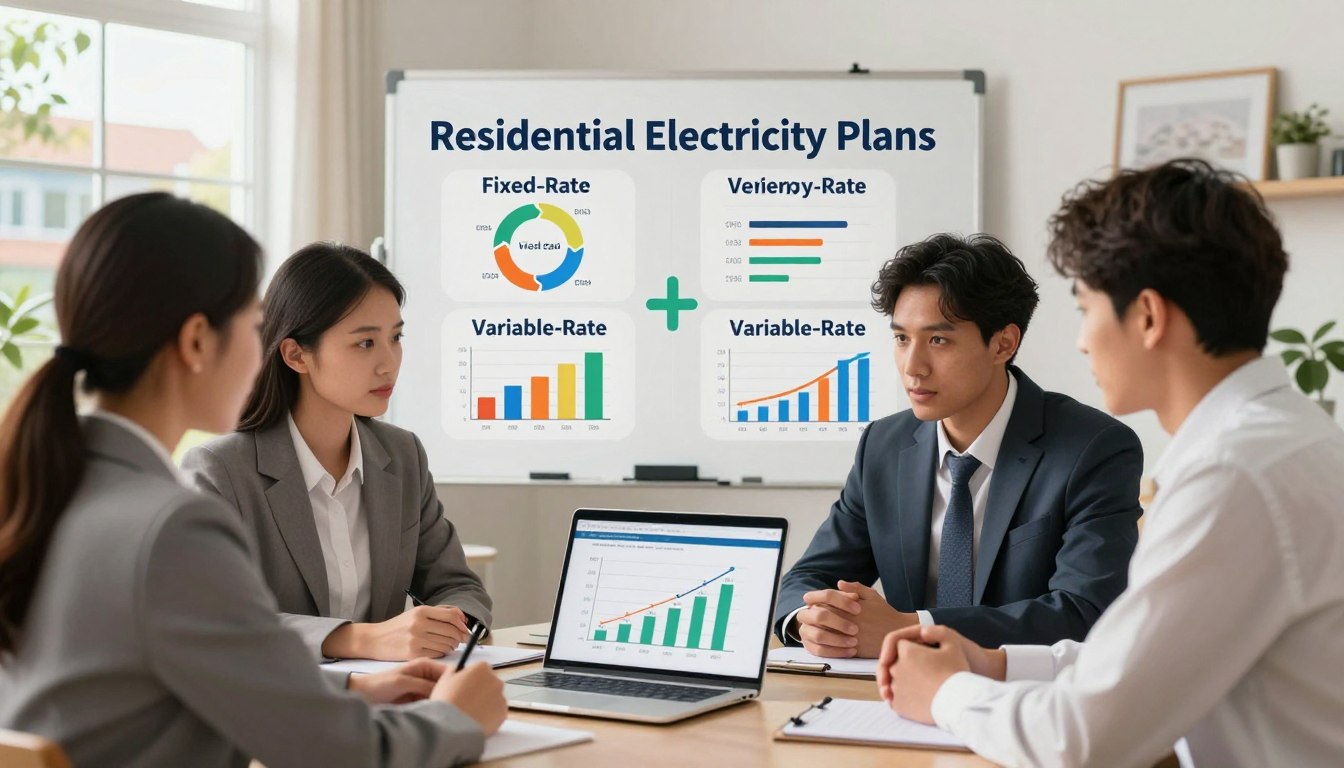
    A visually engaging infographic illustrating various electricity pricing options for residential plans. In the foreground, display a detailed, colorful diagram showing categories like fixed rate, variable rate, and time-of-use plans with user-friendly icons. In the middle, showcase graphs comparing costs and savings with different plans over time. The background should feature a soft gradient symbolizing energy flow, incorporating subtle lightning bolt motifs. Use bright, natural lighting to create a vibrant atmosphere, and maintain a clear focus with a slightly blurred background for depth. The perspective should be slightly angled, capturing an informative yet inviting view to entice readers.

    Fixed-Rate Plans

    A fixed-rate plan gives you peace of mind by keeping your price the same for your contract’s length. Your rate won’t change, even if prices go up during extreme weather or high demand. It’s a great choice if you like predictable monthly bills and don’t want surprises.

    Variable-Rate Plans

    Variable-rate plans offer a chance to save money if you’re okay with some uncertainty. Your rate changes with the market, so you might pay less when energy is cheap. But, your costs can go up fast during high demand times, making these plans better for those who watch the market closely.

    Time-of-Use Plans

    Time-of-use plans reward you for using your appliances wisely. You pay less during off-peak hours, like late at night or early morning. By moving big energy tasks to these times, you can significantly lower your bill.

    Prepaid Electricity Options

    Prepaid electricity options offer great flexibility for your home. You pay for your power upfront, so you don’t need long-term contracts, credit checks, or big deposits. This is a convenient way to manage your budget without worrying about unexpected bills.

    Plan Type Best For Price Stability Flexibility
    Fixed-Rate Budget Planning High Low
    Variable-Rate Market Savvy Low Medium
    Time-of-Use Energy Savers Medium Medium
    Prepaid Short-term Needs Variable High

    Essential Tips for Comparing Utility Providers

    Mastering the art of comparing utility providers can help you control your monthly bills. It’s not just about finding the cheapest rate. By following a structured approach, you can find a plan that suits your lifestyle and budget.

    Checking Your Monthly Energy Usage

    Before signing up for a new service, understand your past energy use. Reviewing your energy use over the last year is the best way to predict your future needs. Most companies provide this data through your online account.

    Look for seasonal usage spikes, like high cooling costs in summer or heating in winter. Accurate data helps you choose between flat-rate or usage-based plans. This step is key to a successful energy plan comparison.

    Evaluating Contract Terms and Cancellation Fees

    The fine print in residential energy contracts can affect your wallet. Always check for early termination fees before committing to a long-term deal. These fees can be high if you switch providers before your contract ends.

    Be aware of rate changes after promotional periods end. Some companies raise rates significantly after the initial offer. Knowing these residential energy contracts details helps avoid unexpected charges.

    Identifying Renewable Energy Incentives

    Many homeowners want to support green initiatives. Look for providers with renewable energy incentives by checking their “green” options. These plans often use wind, solar, or hydroelectric power.

    Choosing a sustainable plan reduces your carbon footprint. Use the table below to compare key features of different providers.

    Feature Standard Plan Green Energy Plan Prepaid Option
    Contract Length 12-24 Months 12-36 Months No Contract
    Rate Type Fixed Fixed or Variable Variable
    Renewable Source Minimal 100% Certified Varies
    Cancellation Fee High Moderate None

    By thoroughly comparing energy plans, you can balance cost, flexibility, and environmental impact. Staying informed ensures your energy choice remains a smart investment for years.

    Conclusion

    You have the power to control your utility costs. Making smart electric service choices is key to saving money. It helps keep your budget safe from high prices.

    Managing your household power plans is an ongoing task. The market and your energy needs change over time. Your lifestyle evolves, so your energy use does too.

    Remember to check your current agreement every year. This simple step keeps your rate in line with your energy use. Companies like Reliant Energy or TXU Energy often change their plans to include new tech and green energy.

    Now, you can confidently move through the energy market. Stay ahead of your monthly bills by being proactive. Your efforts will lead to financial stability for your home in the long run.

    FAQ

    Why is understanding residential electricity plans so important for my household?

    In places like Texas, Pennsylvania, and Illinois, the energy market is open to competition. Companies like NRG Energy and Constellation compete for your business. Knowing about residential electricity plans helps you manage your monthly bills better. It keeps your budget safe from sudden price increases.

    What are the main electricity pricing options I should consider?

    There are four main options. Fixed-rate plans keep your rate steady for a set time. Variable-rate plans change with the market, which can be good if prices go down. Time-of-use plans are great if you use smart devices to use less power when it’s cheaper. Prepaid plans, like those from Payless Power, let you pay upfront without needing a credit check.

    How do I begin a successful energy plan comparison?

    To compare utility providers, start by looking at your past bills. Check your kWh usage over the last year. Use tools like Choose Energy or EnergySage to find plans that match your usage, not just the lowest rate.

    What should I watch out for in residential energy contracts?

    Always read the fine print in your contracts. Look at the commitment length and any fees for ending early. Some plans have base charges, so understand the total cost per kWh at different usage levels.

    Can I find household power plans that are environmentally friendly?

    Yes, many providers like Green Mountain Energy offer green energy plans. Look for plans that use 100% wind or solar power. These plans help support renewable energy while keeping your power reliable.

    How often should I review my electric service choices?

    Review your plans at least once a year or when your contract is up. Markets change, and new deals from companies like Direct Energy or Reliant may appear. Staying informed helps keep your plan in line with your needs and budget.
  • How Home Insulation Can Affect Energy Efficiency Tips

    How Home Insulation Can Affect Energy Efficiency Tips

    Did you know that nearly 30% of a typical building’s warmth escapes through the roof and walls? This hidden loss is a major reason why utility bills often skyrocket during extreme weather. Understanding how home insulation can affect energy efficiency is the first step toward reclaiming control over your monthly expenses.

    Think of your living space as a thermos. Proper materials act as a thermal barrier, keeping your interior climate stable regardless of the season. By blocking heat transfer, you stop the constant struggle between your furnace and the outdoor elements.

    Creating a sustainable environment starts with these foundational upgrades. When you prioritize better thermal protection, you ensure a cozy, quiet, and cost-effective sanctuary for your family. Mastering these concepts makes maintenance simple and rewarding.

    Key Takeaways

    • Proper thermal barriers significantly reduce monthly utility costs.
    • Insulation acts as a shield against both winter cold and summer heat.
    • A well-sealed building envelope improves overall indoor comfort levels.
    • Strategic upgrades contribute to a more sustainable and eco-friendly lifestyle.
    • Understanding these dynamics is essential for modern property maintenance.

    Understanding How Home Insulation Can Affect Energy Efficiency

    Many homeowners don’t know the science behind keeping their homes warm all year. Home insulation creates a strong thermal barrier. This brings big home insulation benefits that do more than just control temperature. Knowing how it works lets you control your home’s climate better.

    A cozy, well-insulated home interior showcasing the benefits of effective insulation for energy efficiency. In the foreground, a woman in professional attire examines an energy efficiency guide, surrounded by samples of insulation materials like fiberglass and foam. In the middle, a large window reveals a sunny day outside, contrasting with the warm, inviting interior ambiance. The background features a thermostat displaying energy savings, alongside energy-efficient appliances and LED lighting subtly illuminating the room. Soft, natural light streams in, creating a comforting atmosphere that emphasizes the connection between home insulation and energy efficiency, with a focus on warmth, comfort, and sustainability.

    The Science of Thermal Resistance

    At the core of keeping your home at the right temperature is thermal resistance, or R-value. This number shows how well a material stops heat from moving through your walls, floors, and ceilings. Higher R-values mean better insulation, keeping your home warm in winter and cool in summer.

    Think of your home as a thermos. Good insulation stops heat from escaping in cold weather and keeps it out when it’s hot. It works by blocking three ways heat can move:

    • Conduction: Heat moving through solid materials.
    • Convection: Heat moving through air.
    • Radiation: Heat moving through electromagnetic waves.

    How Insulation Reduces HVAC Strain

    When your home is well-insulated, your heating and cooling systems don’t have to work as hard. This means they use less energy, which lowers your insulation impact on energy costs. Your systems run more efficiently when they don’t have to work as hard.

    Having a steady indoor temperature means your HVAC doesn’t have to run full blast all the time. This has many benefits for your home:

    • Longer life for your HVAC system.
    • Less need for repairs because it’s used less.
    • Lower bills every month.

    Choosing high-quality insulation is a smart move for your wallet. By focusing on the insulation impact on energy costs, you keep your home cozy and save money. The right installation is key to saving money in the long run.

    Practical Tips for Improving Your Home Energy Efficiency

    Turning your home into an energy-efficient space is simpler than you think. A few energy-saving tips can make your home more comfy and cut down on utility bills.

    Identifying Areas with Poor Insulation

    To boost your home’s energy efficiency, start with a simple check-up. Look at your attic, basement, and crawl spaces for thin or damaged insulation.

    If you see the floor joists in your attic, your insulation is probably too thin. These spots are big heat losers in winter and gainers in summer.

    Choosing the Best Insulation Materials for Your Climate

    Picking the right insulation is key for lasting results. The best insulation for saving energy varies by your local climate and building rules.

    In cold areas, choose materials with a high R-value to keep warmth in. For warmer places, use reflective barriers to block the sun’s heat.

    Sealing Air Leaks to Maximize Insulation Performance

    Insulation won’t work if your home leaks air. Sealing air leaks is a top energy-efficient home solution.

    Pay attention to gaps around windows, doors, and outlets. Sealing these spots keeps your air conditioned air in, saving your HVAC system’s energy.

    Long-Term Benefits of Upgrading Your Attic Insulation

    Improving your attic insulation is a smart investment. It makes your whole house warmer.

    By doing this, you’ll see a big difference in room temperatures. This change also saves you money on energy and makes your HVAC last longer.

    Conclusion

    Turning your home into a high-performance one begins with smart upgrades. You now know how to make changes that enhance your daily life. By focusing on insulation, you can keep your home climate stable and save money on energy.

    Choosing the right materials is key to maintaining your home. Opting for energy-efficient insulation keeps your home comfortable in any weather. These upgrades not only add value to your home but also reduce your environmental impact.

    Start by checking your current setup today. Even small changes can lead to big improvements in performance and savings. Your dedication to a better home environment will keep your family comfortable and your finances secure for years.

    FAQ

    Exactly how home insulation can affect energy efficiency in my daily life?

    Home insulation acts as a thermal barrier. It keeps your home warm in winter and cool in summer. This means you need less heat or air conditioning, saving you money and energy.

    What are the most significant home insulation benefits I will notice after an upgrade?

    Upgrading insulation makes your home more comfortable and energy-efficient. You’ll save money on bills and enjoy better air quality. Plus, your home will be quieter and more valuable when you sell it.

    Are there any specific energy-saving tips for homeowners on a budget?

    Sealing gaps around windows and doors is a great start. Use Great Stuff insulating foam to block leaks. This simple step can make a big difference in your energy use without a big expense.

    How does improving home energy efficiency help my HVAC system last longer?

    Better insulation means your HVAC system works less hard. It doesn’t have to run as long or as often. This reduces wear and tear, making your system last longer.

    What should I know about the insulation impact on energy costs before hiring a contractor?

    Insulation’s impact on energy costs depends on its R-value. Higher R-values mean better insulation. Upgrading your attic and crawl spaces can greatly reduce your energy use and bills.

    What are some of the most effective energy-efficient home solutions for older houses?

    For older homes, dense-packing cellulose insulation is a good choice. It can be blown into walls without tearing them down. This provides modern insulation for older homes.

    How do I determine the best insulation for saving energy in my specific climate?

    The best insulation varies by climate. In humid areas, moisture-resistant spray foam is key. In cold areas, high-R-value fiberglass batts are better. Use the Energy Star climate zone map to find the right insulation for your area.

    Is reducing utility bills with insulation a long-term strategy?

    Yes, insulation is a smart long-term investment. It saves you money every month. By sealing your home, you protect yourself from rising energy costs.

    What are the smartest energy-efficient insulation choices for an attic renovation?

    For attic renovations, consider radiant barriers and blown-in fiberglass. This combination fights both conductive and radiant heat. It keeps your attic cool even in the hottest summers.
  • How Merchant Payment Processing Fees Work A Friendly Guide

    How Merchant Payment Processing Fees Work A Friendly Guide

    Did you know small businesses lose nearly 3% of their revenue to hidden costs? In the fast-paced US market, these small percentages add up quickly. They often eat into your hard-earned profits without you even noticing.

    Understanding financial statements can feel overwhelming. But, mastering these details is key to protecting your business. It ensures you keep more of what you earn.

    This guide simplifies technical jargon into actionable insights. By the end of this article, you’ll feel empowered to read your statements with confidence and clarity. Let’s break down the mechanics behind these charges. This way, you can make smarter financial decisions for your company.

    Key Takeaways

    • Understand the core components that make up your monthly transaction costs.
    • Learn to identify hidden charges that drain your profit margins.
    • Gain the confidence to negotiate better rates with your service providers.
    • Simplify complex financial statements into clear, readable data.
    • Protect your bottom line by optimizing your current financial setup.

    Understanding How Merchant Payment Processing Fees Work

    Learning about merchant payment processing fees is key to better profits. When you accept a card payment, the money goes through many financial institutions. Each one takes a small part of the transaction.

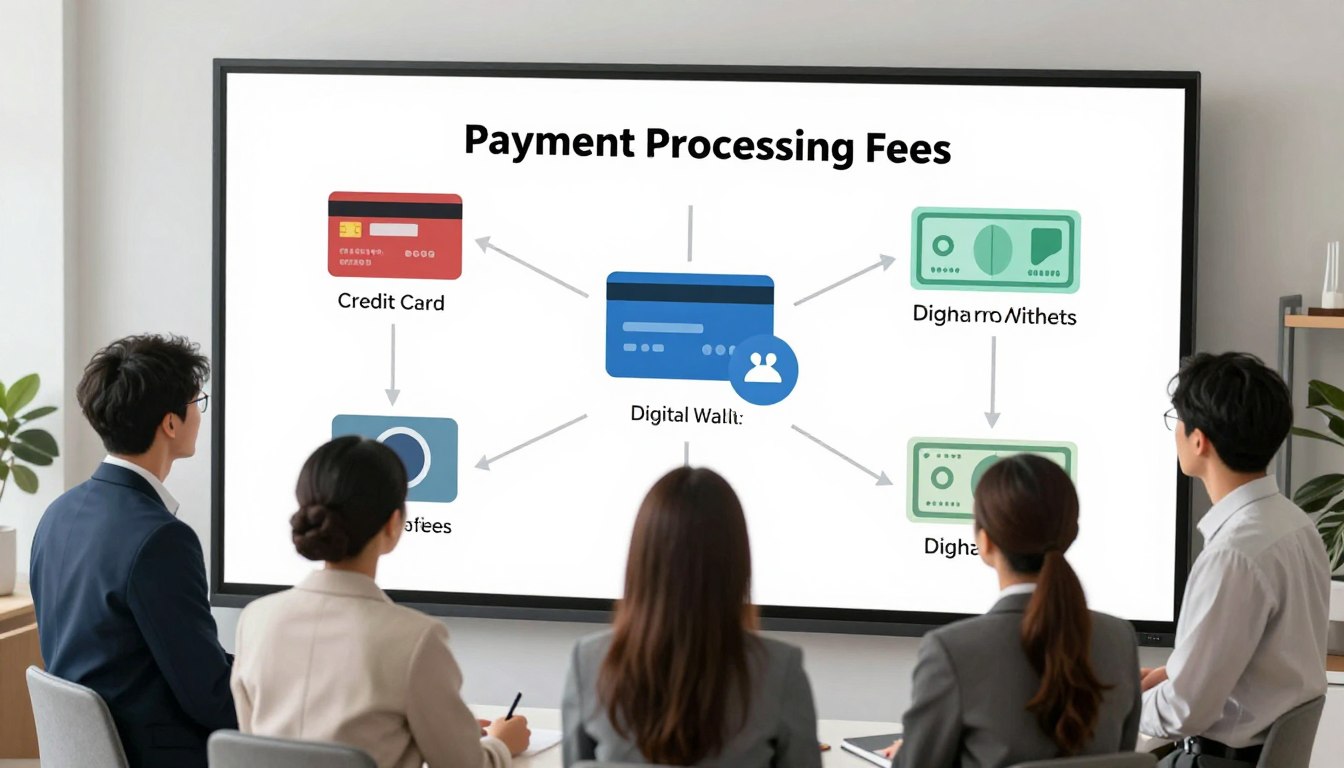
    Breaking down these costs helps you understand where your money goes. Payment processing fees explained involve three main parts of your monthly bill.

    A professional office setting focused on merchant payment processing fees. In the foreground, a sleek wooden desk with a laptop displaying graphs and charts related to payment processing fees. Next to the laptop, a calculator and notepad with calculations visible. In the middle, a diverse group of three professionals in business attire—two women and one man—engaged in an animated discussion, pointing at the screen and sharing ideas. In the background, a whiteboard filled with diagrams explaining the flow of payment processing, including banks, fees, and retailers. Soft, natural lighting filtering through large windows, creating a welcoming atmosphere. The overall mood is collaborative and informative, emphasizing understanding and clarity around merchant payment processing fees.

    The Three Pillars of Processing Costs

    Business owners often see just one total on their statements. But, your costs are split into three parts. These are interchange fees, assessment fees, and the processor markup. Knowing the difference is important for your finances.

    Interchange and assessment fees are set by the card networks. But, the processor markup can be negotiated.

    Interchange Fees Explained

    Interchange fees are the biggest part of your costs. They are set by Visa, Mastercard, and Discover. These fees go to the card-issuing bank to cover risks and costs.

    These rates are fixed, so no one can lower them for you. Understanding merchant payment fees means accepting these costs as part of doing business in the U.S.

    Assessment and Processor Markup

    Assessment fees are smaller and go to the card brands to keep their networks running. The processor markup is what your payment provider charges for their services.

    This markup is where you have control. Compare providers to avoid high fees.

    Fee Category Who Sets It? Negotiable?
    Interchange Card Networks No
    Assessment Card Brands No
    Processor Markup Your Provider Yes

    Reviewing these three pillars helps you see if your pricing is fair. Transparency is key when choosing a payment provider.

    Steps to Analyze and Reduce Your Transaction Costs

    By taking a proactive approach to your payment processing fees, you can save a lot each month. Auditing your financial data helps you make better business decisions.

    Step 1: Review Your Current Merchant Statement

    Your monthly statement is full of useful information about your merchant services fee structure. It’s important to look at each line item to understand where your money goes.

    Identifying hidden surcharges

    Many processors add extra fees that aren’t always clear. Look for statement fees, PCI compliance charges, or batch fees that increase your costs without adding value.

    Comparing effective rates

    Calculating your effective rate shows the true cost of processing. Divide your total monthly fees by your total processing volume to find the percentage you pay on each dollar.

    Step 2: Choose the Right Pricing Model for Your Business

    Picking the right pricing model is key for growth. A detailed payment processor fee breakdown will show if your current plan fits your transaction volume.

    Flat-rate pricing vs. interchange-plus

    Flat-rate pricing is simple, good for small businesses with steady sales. But interchange-plus pricing is more transparent and cost-effective for businesses with more sales.

    Tiered pricing considerations

    Tiered pricing groups transactions into buckets like “qualified” or “non-qualified.” While it seems simple, it can hide higher costs. Make sure to ask your provider to explain how they categorize your sales.

    Step 3: Optimize Your Payment Acceptance Methods

    Changing how you accept payments can lower your merchant account transaction costs. Small changes can lead to big improvements in your profit margins.

    Encouraging debit card transactions

    Debit cards have lower processing fees than credit cards. Consider giving small incentives or training staff to prefer debit options.

    Reducing chargeback risks

    Chargebacks are costly and time-consuming. Using strong fraud prevention tools like address verification and CVV checks will protect your revenue and keep costs low.

    Conclusion

    Mastering your payment costs is key to long-term business success. You now have the tools to control your merchant account expenses. By using these strategies, your company can stay profitable and serve customers well.

    Regularly checking your monthly statements helps keep costs low. Knowing your credit card processing rates lets you find hidden fees that cut into profits. This way, you can negotiate better deals with providers like Stripe or Square.

    Being open about your finances is important for managing cash flow. Organizing your payment gateway pricing helps you predict expenses accurately. This confidence lets you grow your business without fear of unexpected costs.

    Small changes can add up to big savings over time. Understanding debit card transaction charges helps you make smart choices about your point-of-sale hardware. Start reviewing your options today to protect your revenue and achieve your growth goals.

    FAQ

    How do merchant payment processing fees work in simple terms?

    When you make a sale, a small part goes to different groups. This includes the interchange fee to the customer’s bank, fees to card networks like Visa, and your service provider’s markup. Knowing this helps you manage costs and keep profits high.

    What is the most transparent merchant services fee structure?

    The “interchange-plus” model is the most clear. It separates costs from your profit margin. This way, you know exactly what you’re paying for and what banks take, avoiding hidden charges.

    How can I find hidden costs in my payment processor fee breakdown?

    Check your statements monthly for “non-qualified” fees or surcharges. A clear breakdown shows where your money goes. If you see unclear fees, ask your provider for a fair deal.

    Why is having debit card transaction charges demystified important for my bottom line?

    Debit cards have lower risk and rates than credit cards. Knowing this lets you choose debit over credit, saving money on fees. This strategy can lower your costs and increase your profits.

    What are the typical payment gateway pricing details I should look for?

    Online stores pay monthly, per-transaction, and sometimes setup fees. It’s key to know these fees don’t double charge you. Understanding your gateway is as important as knowing processing fees.

    How often should I review my merchant account transaction costs?

    Review costs at least once a quarter. As your business grows, you might get better rates. Regular checks ensure your fees match your business’s needs and market standards.
  • Business Insurance Coverage Types Explained for Small Business

    Business Insurance Coverage Types Explained for Small Business

    Did you know that nearly 40% of small companies in the United States face a significant legal claim within their first decade of operation? This is why it’s so important to manage risks well. It’s not just a luxury, but a vital necessity for your success.

    Understanding protection can seem tough when you’re busy with daily tasks. But the right policy is like a safety net. It protects your assets from legal and operational surprises.

    By understanding the basics of Business Insurance Coverage Types Explained, you can grow your business safely. You’ll feel ready to make smart choices that protect your company’s future. Let’s make these important protection types easy to understand, so you can focus on your business.

    Key Takeaways

    • Risk management is essential for long-term financial stability.
    • Proactive protection shields your assets from unexpected legal claims.
    • Understanding policy basics helps you make smarter financial choices.
    • Proper planning reduces the impact of operational disruptions.
    • Empowerment comes from knowing your specific protection needs.

    Essential Business Insurance Coverage Types Explained

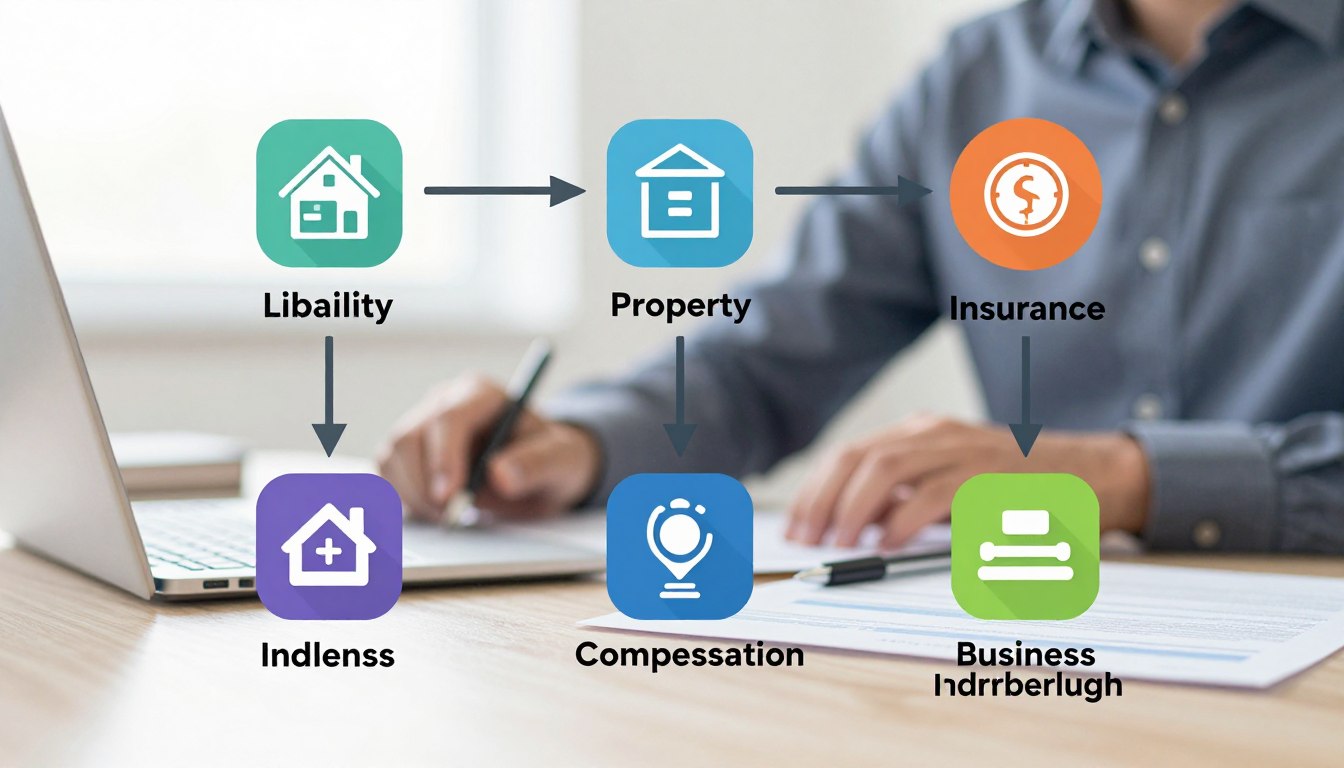
    Building a strong business starts with the right insurance. Knowing about Business Insurance Coverage Types Explained lets you focus on growing. These four main policies are key for any small business owner.

    A professional office setting illustrating various types of business insurance coverage. In the foreground, a diverse group of four business professionals—two men and two women—are engaged in a discussion around a table covered with documents and charts related to insurance types, all dressed in formal business attire. In the middle ground, a whiteboard displays colorful diagrams and bullet points labeled with key coverage types: general liability, property insurance, workers' compensation, and business interruption. The background features large windows with natural light pouring in, creating a bright and inviting atmosphere. Use a depth of field effect to keep the focus on the group while slightly blurring the background, emphasizing a sense of collaboration and professionalism.

    General Liability Insurance

    This policy is a must for any company. General Liability Insurance covers third-party injuries or property damage. It helps pay for legal costs and settlements if someone gets hurt or property is damaged at your place.

    Commercial Property Insurance

    Your office equipment, inventory, and furniture are essential. Commercial Property Insurance protects these assets from damage. It covers losses from fire, theft, or vandalism. This way, you can quickly get back to work without losing a lot of money.

    Workers’ Compensation Insurance

    If you have employees, you must have Workers’ Compensation Insurance. It pays for medical bills and lost wages for injuries or illnesses at work. This policy protects your employees and keeps your business safe from lawsuits.

    Professional Liability Insurance

    Businesses that offer expert advice or services need special protection. Professional Liability Insurance, or errors and omissions insurance, covers claims of negligence. It’s a critical safeguard for professionals who want to keep their reputation safe, even when mistakes are made.

    Specialized Protection for Modern Risks

    As your business grows, you face new risks. Standard policies might not cover these challenges. Specialized insurance keeps your hard work safe from unexpected events.

    Business Interruption Insurance

    Unexpected closures can hurt your business a lot. Business Interruption Insurance helps you recover lost income. It covers expenses like rent and payroll while you recover.

    Cyber Liability Insurance

    Your company’s data is very valuable. Cyber Liability Insurance protects you from data breaches or cyberattacks. It covers legal fees, customer notifications, and system restoration.

    Commercial Auto Insurance

    If your business uses vehicles, personal auto policies won’t do. Commercial Auto Insurance covers company cars, trucks, or vans. It protects you from accidents, theft, or liability claims.

    Umbrella Insurance

    Major lawsuits or disasters can go beyond your primary insurance. Umbrella Insurance adds extra liability protection. It’s a smart, cost-effective way to protect your business from big financial losses.

    How to Assess Your Specific Coverage Needs

    Building a strong business starts with matching your insurance to your risk level. This means thinking carefully about the dangers you face and how much you can afford to protect against them. By knowing the biggest threats to your business, you can keep it safe from surprises.

    Evaluating Your Industry Risks

    Every business faces unique risks that can hurt your profits. For example, a construction company has different worries than a marketing agency. Start by listing the possible accidents or legal problems that could stop your work.

    Think about the things you own and the services you offer. If you deal with personal customer data, you’re at risk for digital attacks. Spending time on this helps you choose the insurance that’s most important for you.

    Balancing Budget and Protection

    Many entrepreneurs worry about keeping their budget in check while protecting their business. You don’t need to buy every insurance policy to be safe. Focus on key coverage that protects your biggest financial risks.

    Check your policy limits every year to make sure they match your growth. It’s smart to have a higher deductible for small risks to save money. This way, you can afford better coverage for big threats without spending too much on premiums.

    Working with a Licensed Insurance Agent

    Insurance contracts can be hard to understand without help. Working with a licensed insurance agent gives you custom advice for your business. They know the local market and can spot gaps in your coverage.

    A good agent is a key partner in your success. They can explain complex policies and adjust your coverage as your business grows. Creating this relationship means you always know how to move forward with your insurance needs.

    Conclusion

    Building a strong company is not just about having a great product or service. You also need to protect your work from unexpected events that could harm your finances.

    Choosing the right insurance mix is key to creating a strong safety net for your business. This way, you can focus on growing while knowing your assets are safe from unexpected costs.

    It’s a good idea to check your current policies with a trusted advisor from companies like Travelers or Hartford. Regular reviews help make sure your coverage matches your business’s changing needs.

    Your dedication to managing risks is what makes your business successful. Contact a licensed agent today to strengthen your protection plan and feel more secure about the future.

    FAQ

    Why is general liability insurance considered the foundation of a business policy?

    General liability insurance is key because it guards against common risks. For example, it covers you if a customer gets hurt in your store. It also helps if you damage someone’s property while using tools.
    This coverage pays for legal costs and medical bills. It keeps your assets safe.

    Do I really need commercial property insurance if I rent my office space?

    Yes, you definitely need it. Your landlord’s policy won’t cover your business stuff. Commercial property insurance protects your gear from damage or theft.
    Without it, you’d have to pay to replace everything. This could shut down your business.

    Is workers’ compensation insurance mandatory for my small team?

    In almost every state, yes. It’s required as soon as you hire your first employee. This policy covers medical care and lost wages for on-the-job injuries.
    It also protects you from being sued by employees. It’s a must-have for any business.

    How does professional liability insurance differ from general liability?

    General liability covers physical accidents. Professional liability (Errors and Omissions) covers mistakes in your advice or service. If a client loses money because of your mistake, this policy helps.
    It covers your legal defense and any settlements.

    Can business interruption insurance help me if a disaster forces me to close temporarily?

    Yes, it can. Business interruption insurance helps replace lost income and covers ongoing expenses. If a disaster forces you to close, this policy ensures you can keep up financially.

    Is cyber liability insurance necessary if I use secure platforms like Shopify?

    Even with secure platforms, your business is at risk for cyber attacks. Cyber liability insurance is vital. It covers costs for notifying customers, credit monitoring, and legal fines if your data is hacked.

    Why can’t I just use my personal auto policy for business trips?

    Personal auto policies don’t cover business use. If you’re driving for work, you need commercial auto insurance. It protects against high costs of damage or medical bills from accidents.

    When should I consider adding umbrella insurance to my portfolio?

    Consider umbrella insurance when your business is at risk for big lawsuits. It adds extra protection beyond your primary policies. It’s an affordable way to protect your business from huge financial losses.
  • Secured vs Unsecured Credit Cards Which Is Best for You

    Secured vs Unsecured Credit Cards Which Is Best for You

    Did you know that nearly 30% of Americans have a subprime score? This often limits their access to traditional lending. Understanding Secured vs Unsecured Credit Cards is key to improving your financial standing. It’s the first step toward a stronger future.

    Your financial health decides which path to take for your long-term goals. Whether you’re starting from scratch or rebuilding, the right tool is essential. Learning about secured vs unsecured credit cards helps you manage your application. This guide makes the journey to better financial health easier, so you can make a smart choice today.

    Key Takeaways

    • Your credit history determines which product is most accessible for your needs.
    • Collateral is typically required for one type of account to lower lender risk.
    • Both options can help you build a positive payment history over time.
    • Choosing the right account prevents unnecessary denials during the application process.
    • Financial goals should dictate your choice between these two primary lending tools.

    Understanding the Core Differences in Secured vs Unsecured Credit Cards

    Starting with credit means knowing the main differences between card types. The key difference is how lenders handle risk. A secured credit card is for beginners or those rebuilding credit. An unsecured credit card is for those with good credit histories.

    A close-up view of a secured credit card prominently displayed on a polished wooden desk, reflecting soft natural light from a nearby window. The card should feature a metallic finish, highlighting its security features like a chip and a lock symbol. In the background, slightly blurred, there are documents and a calculator to suggest a financial environment. The atmosphere is professional and inviting, evoking feelings of trust and financial stability. The lighting should create gentle shadows, enhancing the textures of the card and the desk. The camera angle is slightly elevated, capturing both the card's details and the ambient workspace, suggesting a thoughtful consideration of financial choices.

    How Secured Credit Cards Work with Deposits

    A secured credit card needs a cash deposit upfront. This deposit is like collateral for the lender, making their risk lower. Because the money is safe, the bank is okay with giving you credit even if you’re new to credit.

    One big secured credit card benefit is that your credit limit matches your deposit. Paying on time shows you’re responsible. This can help you build good credit over time, leading to better financial options.

    The Role of Credit History in Unsecured Credit Cards

    An unsecured credit card doesn’t need a deposit. Instead, the issuer looks at your credit report and score. They check your payment history, total debt, and credit length to decide if you’re a good borrower.

    The main unsecured credit card advantages are higher limits and rewards like cash back or travel points. But, because these cards aren’t secured, unsecured credit card eligibility is stricter. You usually need a good to excellent credit score to qualify.

    Comparing Approval Odds and Financial Requirements

    When comparing secured vs unsecured credit cards, consider your financial situation. If your credit is thin, getting a secured card is often easier. Lenders focus more on your deposit than past mistakes.

    The table below shows the main differences to help you choose the right card for you:

    Feature Secured Card Unsecured Card
    Security Deposit Required Not Required
    Approval Difficulty Low (Easier) High (Stricter)
    Credit History Not Required Essential
    Primary Goal Building Credit Rewards/Spending

    Key Factors to Consider When Choosing Your Card

    Before getting a new card, think about your money situation and future goals. Choosing between secured vs unsecured credit cards is key for your financial health. By carefully looking at your options, you pick a card that fits your life and helps you build credit.

    Assessing Your Current Credit Score

    Your credit score shows what financial products you can get. If your score is low, getting an unsecured credit card might be hard. Lenders want to see you’ve borrowed wisely before they say yes.

    Check your credit report for mistakes or areas to improve. Knowing your score helps avoid bad marks on your file. If your score is low, look for cards that help fix your credit.

    Evaluating the Need for a Security Deposit

    Secured credit cards need a cash deposit that’s your credit limit. This makes it easier to get approved, even with a thin credit file. Make sure you have the cash for this deposit before applying.

    It’s important to know the secured credit card requirements before you put down your money. Think about these things when checking your budget:

    • Minimum Deposit: See if the amount fits your savings.
    • Refundability: Find out how and when you can get your deposit back.
    • Upgradability: Look for cards that let you move to an unsecured account later.

    Comparing Potencial Rewards and Interest Rates

    When comparing secured vs unsecured credit cards, look at the costs and benefits. Some cards offer cash back or travel points, while others focus on building credit with lower fees. Choose cards that offer value without high annual fees.

    Check the Annual Percentage Rate (APR) of each card. If you carry a balance, a lower interest rate is crucial to avoid high costs. Always read the fine print to understand how interest is calculated on your account.

    Planning for Future Credit Building Goals

    Your choice today is the start of your financial future. Think about where you want your credit score to be in a year or two. If you want better rewards cards or lower mortgage rates, choose a card that reports to all three major credit bureaus.

    Being consistent is the most important factor in building your credit. Making small, on-time payments shows you’re reliable to lenders. This will open doors to better and more rewarding credit products in the future.

    Conclusion

    Your journey to better finances begins with the right choice. Whether it’s a secured credit card from Discover or Capital One, or a traditional one, your actions matter most.

    Consider the benefits of a secured card for fixing your credit. These cards let you build a good payment history safely. If your credit is already strong, look into unsecured cards for rewards and higher limits.

    Check your credit report to see if you qualify for an unsecured card. Lenders want to see you manage your debt well. Your credit score improves with on-time payments and smart spending.

    Choose the best option for your budget today. Using your card wisely is key to achieving your financial goals.

    FAQ

    What is the fundamental difference in a secured vs unsecured credit card comparison?

    The main difference is the security deposit. A secured credit card needs a cash deposit as collateral. On the other hand, an unsecured credit card doesn’t need a deposit. It’s based on your financial reliability and credit history.

    What are the primary secured credit card benefits if I am just starting out?

    Secured credit cards have a high approval rate for those with thin credit or past mistakes. Cards like the Capital One Platinum Secured Credit Card help you report positive payment history. This is key to improving your credit score over time.

    What are the typical unsecured credit card advantages for consumers?

    Unsecured credit cards offer the advantage of not using your cash for a deposit. Cards like the Chase Freedom Flex® have better rewards, such as cash back and travel points. They also have lower interest rates for those with good credit.

    What are the standard unsecured credit card eligibility requirements?

    To get an unsecured credit card, you need a good credit score, income, and debt-to-income ratio. Lenders like American Express or Citi look for a history of on-time payments and responsible debt before approving you.

    How do I find the best secured credit card for my needs?

    Look for a secured card that reports to all three credit bureaus and offers a chance to upgrade to an unsecured card. The Discover it® Secured Credit Card is a good choice. It offers cash-back rewards and Discover reviews your account after seven months to see if you qualify for a deposit refund.

    What are the most common secured credit card requirements I should prepare for?

    Secured cards usually require a minimum deposit (often $200), proof of steady income, and a valid bank account. The credit limit is the same as the deposit amount, unlike unsecured cards.

    Can I transition from a secured card to an unsecured card eventually?

    Yes! Many use a secured credit card as a first step. After showing consistent payments, banks like Bank of America might offer to switch you to an unsecured credit card. They’ll refund your deposit and keep your account history.
  • How Credit Utilization Can Affect Credit Scores Explained

    How Credit Utilization Can Affect Credit Scores Explained

    Did you know nearly 30% of your financial reputation is tied to one number? Many people focus on paying bills on time. But they often ignore the ratio of their revolving debt to their total limits.

    This ratio, known as your balance ratio, is a critical indicator of your financial health. Lenders use it to see if you manage your money well or if you’re too dependent on borrowed funds.

    Understanding this concept is key to mastering your financial future. By keeping your balances low, you show stability and reliability to lenders. This guide will help you understand these metrics. It will give you the tools to improve your financial health starting today.

    Key Takeaways

    • Your debt-to-limit ratio is a major factor in your financial profile.
    • Maintaining low balances relative to your limits boosts your standing.
    • Lenders view high usage as a sign of possible risk.
    • Small changes in your spending habits can lead to big improvements.
    • Empower yourself by regularly checking your revolving accounts.

    Understanding How Credit Utilization Can Affect Credit Scores

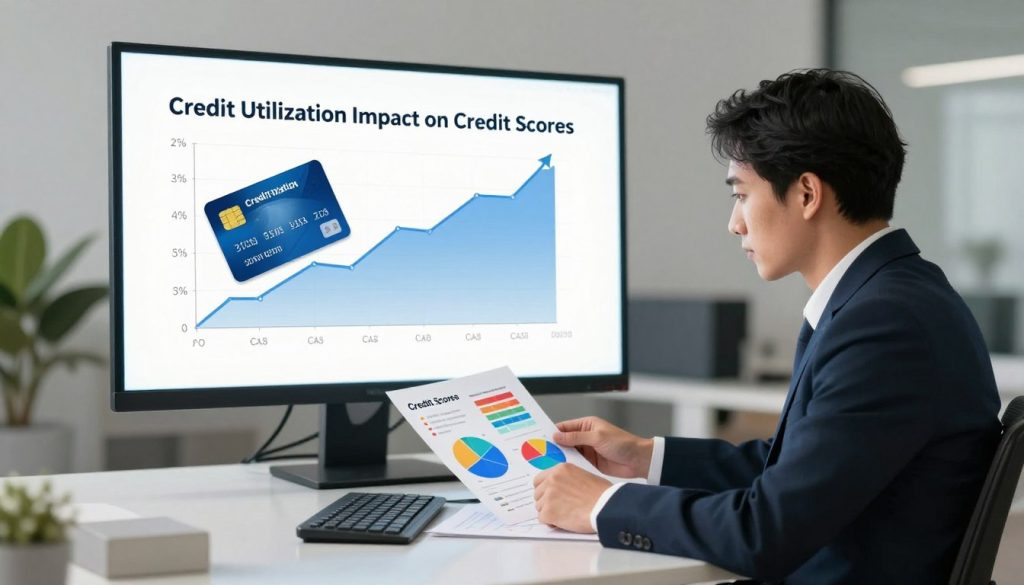
    Did you know your daily spending can impact your financial future? The credit utilization impact on credit scores is a key factor you can control. By managing your balances, you’re taking a step towards a stronger financial future.

    A visually impactful illustration representing the concept of "Credit Utilization Impact on Credit Scores." In the foreground, a professional sitting at a sleek desk, analyzing colorful graphs and charts depicting fluctuating percentages of credit utilization and credit scores, dressed in a smart business attire. In the middle ground, a large digital display shows a rising credit score alongside a credit card with a visible utilization ratio. The background features a modern office environment with neutral colors, soft lighting to provide a calm atmosphere, and a plant to create a refreshing vibe. The composition captures a sense of seriousness and professionalism, highlighting the importance of understanding credit utilization and its effects.

    Defining the Credit Utilization Ratio

    Your utilization ratio is a simple math problem. It’s your total revolving debt divided by your total available credit limits.

    For instance, if you have $10,000 in credit limits and $3,000 in balances, your ratio is 30%. Knowing the credit utilization ratio and credit score link is key. It shows how much credit you’re using.

    Why Lenders Monitor Your Revolving Debt

    Lenders watch these numbers closely. They see high utilization as a sign of financial distress.

    They want to see you have credit but not use it for everything. This is why credit utilization importance for credit scores is huge. It shows you can handle debt without relying on it too much.

    The Mathematical Impact on Your FICO Score

    In the FICO scoring model, your ratio is very important. It’s a big part of what makes up your credit score, often making up nearly 30% of it.

    Small changes in your balances can make a big difference in your score. Keeping balances low shows lenders you’re a low-risk borrower. This helps keep your credit profile healthy and stable over time.

    Best Practices for Managing Your Credit Utilization

    Controlling your finances begins with smart credit use. By following credit utilization best practices, you can boost your credit score. These habits ensure you use your credit wisely, balancing what you owe with your total limits.

    Aiming for the Recommended 30% Threshold

    Experts advise keeping your revolving debt under 30% of your credit limit. This shows lenders you’re a responsible borrower. A low usage rate makes your profile more appealing to creditors.

    Timing Your Payments Before the Statement Date

    Many wait until the due date to pay their bills. But, the balance reported to credit bureaus is the statement closing date amount. Paying a few days before the statement closes ensures a lower reported balance. This is key for managing credit utilization for better credit scores.

    Requesting Credit Limit Increases Strategically

    Asking for a higher credit limit can improve your ratio. This increases your available credit without spending more. It’s a smart way to lower credit utilization for higher credit scores, as long as you don’t increase spending.

    Avoiding New Debt During Sensitive Financial Periods

    Timing is critical for your credit health. Avoid new accounts when applying for big loans like mortgages or auto loans. New debt can lower your score and increase your utilization rate, affecting your loan approval odds.

    Conclusion

    Keeping your credit healthy takes ongoing effort. It’s all about watching your revolving debt closely. This is key to a strong score with Equifax, Experian, and TransUnion.

    You now know how to handle your accounts better. Using these tips can improve your credit score. This makes you more reliable to lenders in the U.S.

    Planning your payments and managing your balances wisely is essential. This approach helps you achieve your financial goals. Stay disciplined with your spending each month.

    These tips offer clear guidance through the banking system in America. Your proactive steps today will open doors to a brighter financial future.

    FAQ

    Exactly how credit utilization can affect credit scores on a monthly basis?

    Your credit score is closely linked to your credit utilization ratio. This ratio shows how much of your available credit you’re using. High balances on cards from issuers like Chase or Citibank can lower your score. On the other hand, keeping balances low shows you’re managing your debt well.

    What is the most effective way to see a positive credit utilization impact on credit scores?

    To boost your score, keep your total revolving debt low. Experts at Experian and Equifax recommend staying under 30% utilization. Using less than 10% of your available credit is even better, showing top-notch financial management.

    Why is managing credit utilization for better credit scores considered so important by lenders?

    Credit utilization is key because it makes up about 30% of your FICO score. Lenders like Wells Fargo watch it closely. A low ratio shows you’re a safe borrower.

    Are there any specific credit utilization best practices regarding payment timing?

    Yes! Pay your balance in full before your statement closes. This keeps your utilization ratio low. It helps your score go up.

    Can requesting a credit limit increase help my score?

    Yes, it can. Getting a credit limit increase on cards like American Express or Capital One can lower your utilization ratio. This is good for your score because it makes your debt seem smaller.

    Should I avoid opening new accounts to manage my utilization?

    Opening new accounts can be risky. It increases your available credit but also lowers your account age. It’s best to focus on paying down existing balances. This way, you can improve your score without the risks of new applications.
  • Common Estate Planning Documents Explained for US Readers

    Common Estate Planning Documents Explained for US Readers

    Did you know that nearly 70% of American adults don’t have a will or trust? This shows a big gap in financial security for many families. Taking control of your future today can prevent stress for your loved ones later.

    We’re here to guide you through the important world of legal preparation. By understanding common estate planning documents, you can protect your assets. These tools are a vital roadmap for your family in tough times.

    Knowing about these estate planning documents makes sure your wishes are followed by the law. This guide is your friend, making complex topics like American probate and asset management easier. Let’s start your journey to peace of mind.

    Key Takeaways

    • Over two-thirds of US adults have not finalized their end-of-life legal arrangements.
    • Proper preparation removes significant emotional and financial burdens from your family.
    • Legal instruments provide a clear roadmap for distributing your assets according to your desires.
    • Navigating probate laws becomes much simpler with the right paperwork in place.
    • Taking action today secures your legacy and protects your loved ones’ future.

    Foundational Tools for Asset Distribution

    You can control your legacy by picking the right legal tools for your estate. Exploring wills and trusts is key to making sure your property goes to the right people. By setting these up now, you give your family clarity and security during tough times.

    A well-organized office workspace features a polished wooden desk in the foreground, elegantly arranged with important estate planning documents titled "Wills" and "Trusts," along with a fountain pen, a notepad, and a calculator. In the middle, there's a filled bookshelf containing legal books and a decorative plant, adding warmth. The background shows a large window with soft, natural light streaming in, illuminating the scene and creating inviting shadows. The atmosphere is calm and professional, suggesting focus and clarity. A person in a smart business suit sits at the desk, deeply engaged in reviewing the documents, reflecting diligence and responsibility in estate planning. The camera angle is slightly above eye level, capturing the scene's depth and inviting viewers to consider the importance of asset distribution.

    Last Will and Testament

    A last will and testament is the base of most estate plans. It lets you name an executor to handle your assets as you wish. It’s a simple yet powerful way to choose guardians for kids and share your final wishes.

    Remember, a will must go through probate. This court process makes sure the document is valid before assets are given to heirs. While it’s a legal must, it can slow things down for your loved ones.

    Revocable Living Trust

    A revocable living trust offers more flexibility. You can move your assets into the trust while alive and keep control. This lets you manage your property as you wish, as long as you can.

    A big plus is that trusts often skip probate. This means your heirs get their inheritance faster and privately. Because it’s revocable, you can change or cancel it if your life changes.

    Testamentary Trust

    A testamentary trust is made through your will and starts after you pass. It’s great for ongoing support for beneficiaries while you’re in control. You can set conditions, like age or milestones, for when they get their inheritance.

    Feature Last Will Revocable Living Trust Testamentary Trust
    Probate Required Yes No Yes
    Control During Life N/A High None
    Privacy Public Record Private Public Record

    Choosing between these options depends on your financial goals and family needs. Understanding wills and trusts is the first step to building a lasting legacy. By acting now, you protect your assets for the future.

    Planning for Incapacity and Medical Decisions

    Protecting your future is more than just managing money. You need to plan for your well-being. You must decide who will make decisions for you if you can’t. By setting clear legal instructions, your voice is heard even when you can’t speak.

    Financial Power of Attorney

    A financial power of attorney lets a trusted person handle your money. They can pay bills, manage bank accounts, or sell property if you can’t. Choosing the right person is key, as they control your money.

    Advance Healthcare Directive

    Healthcare directives tell doctors what you want in medical care. They prevent confusion among family members. By making an advance healthcare directive, you control your medical care before a crisis.

    Living Will

    A living will outlines your wishes for life-saving treatments. It covers things like artificial nutrition or ventilation. This ensures your medical team respects your values at the end of life.

    Healthcare Proxy

    A healthcare proxy, or medical power of attorney, lets someone make medical decisions for you. They act as your advocate when you can’t speak for yourself. They work with doctors to respect your personal wishes.

    Document Type Primary Purpose Decision Maker
    Financial Power of Attorney Manage money and property Designated Agent
    Living Will Define end-of-life care Your written instructions
    Healthcare Proxy Make medical choices Designated Agent

    Common Estate Planning Documents Explained for Your Peace of Mind

    A good estate plan is more than just signed papers. It’s important to understand how common estate planning documents work together. This way, you can plan for your future effectively.

    Why You Need a Comprehensive Plan

    Many people see legal papers as separate tasks. But, not combining financial and medical plans can leave you unprotected.

    A complete plan ensures your wishes are followed, no matter what. It ties your goals together, creating a seamless safety net for your assets and health.

    How These Documents Work Together

    Your financial and medical plans must be in sync. For example, your power of attorney should match your living trust or will.

    When estate planning documents work together, your agents can act fast and clearly. This avoids confusion, letting your loved ones focus on what’s important.

    Updating Your Documents After Life Events

    Your life changes, and so should your legal plan. It’s key to check your estate planning documents after big life events like getting married, divorced, or having a child.

    Not updating can cause problems that go against your current wishes. Regular maintenance keeps your legal plan up-to-date with your life.

    Here are reasons to review your documents:

    • Marriage or Divorce: Changes in marital status often require updates to beneficiaries.
    • New Additions: The birth or adoption of a child necessitates a review of your guardianship choices.
    • Financial Shifts: Significant changes in your net worth or asset types may require structural adjustments.

    Conclusion

    By taking charge of your legal matters, you ensure your loved ones are safe. You can shape your future by getting these important documents in order today.

    Estate planning is like a map for your family in tough times. It cuts out the guesswork and reduces stress when quick decisions are needed. You make it clear to your heirs what you want.

    As your financial goals and life change, so should your plans. Regularly reviewing your documents keeps your strategy up to date. LegalZoom or Rocket Lawyer can help you stay on track.

    Acting now safeguards the people and things you care about most. You deserve the calm that comes with a solid plan. Begin securing your future by organizing your documents this week.

    FAQ

    What are the most common estate planning documents I should have in place?

    You should have a few key documents to protect your future. These include a last will and testament, a revocable living trust, a financial power of attorney, and an advance healthcare directive. They help manage your assets, health, and your family’s well-being.

    What is the primary difference between wills and trusts?

    Wills and trusts both help with asset distribution, but they work in different ways. A will is used after you pass away and goes through probate. A revocable living trust is active while you’re alive. It lets you control your assets and transfer them privately to your heirs.

    How does a testamentary trust differ from a revocable living trust?

    A revocable living trust is made while you’re alive and can be changed. A testamentary trust is in your will and only starts after you die. It’s used to manage inheritances for minors or those with special needs.

    Why is a financial power of attorney essential for my peace of mind?

    This document is key because it lets someone you trust handle your money if you can’t. Without it, your family might have to go to court to manage your finances. This includes paying bills and handling investments.

    What is the distinction between a living will and a healthcare proxy within an advance healthcare directive?

    An advance healthcare directive includes two important parts. A living will outlines your wishes for medical care at the end of life. A healthcare proxy names someone to make medical decisions for you if you can’t.

    Can I use online services like LegalZoom or Trust & Will to create these estate planning documents?

    Yes, many people use LegalZoom, Rocket Lawyer, or Trust & Will to make their documents. These services are great for simple estates. But, if your situation is complex, it’s wise to have an attorney review your documents.

    How often should I revisit and update my estate planning documents?

    Review your plan every three to five years or after big life changes. This includes getting married, having a child, or changing your finances. Updating ensures your wishes are followed.

    Does having these documents in place really help my family avoid probate?

    Yes, using a revocable living trust is a top way to skip probate. By putting your assets in the trust, they avoid probate. This means your heirs get their inheritance faster and with less cost.
  • What Consumers Should Know About Contract Disputes Explained

    What Consumers Should Know About Contract Disputes Explained

    Did you know the average American signs over 100 digital agreements yearly without reading them? This simple habit often leads to unexpected legal headaches when terms shift or services fail to meet expectations.

    Understanding what consumers should know about contract disputes is your best defense against sudden financial loss. Whether you are renting an apartment or buying a new car, these legal papers define your rights and responsibilities.

    Being proactive helps you navigate complex language with total confidence. By learning the basics, you protect your hard-earned money and avoid common pitfalls in daily transactions. This guide covers what consumers should know about contract disputes to ensure you stay in control of your agreements.

    Key Takeaways

    • Most people sign legal documents without reading the fine print.
    • Proactive awareness prevents unnecessary financial stress.
    • Legal agreements define your rights in everyday transactions.
    • Preparation is the most effective way to handle disagreements.
    • Clear understanding leads to better decision-making for your future.

    Essential Facts: What Consumers Should Know About Contract Disputes

    Knowing what you sign is key to protecting yourself. When you agree to a contract, you’re setting the rules for your deal. Being informed helps avoid stress.

    A professional meeting room setting illustrating common causes of contract disputes. In the foreground, a diverse group of four business professionals in formal attire are gathered around a conference table, looking concerned as they review a contract document. In the middle, a large whiteboard displays key issues like "miscommunication," "breach of terms," "delays," and "payment disputes" illustrated with simple icons. In the background, a window lets in natural light, casting a warm glow over the scene, while a city skyline is faintly visible outside. The overall mood is tense but focused, capturing the seriousness of contract disputes while maintaining a professional atmosphere. The image should be bright, with soft shadows and a clear depth of field to accentuate the subjects and their surroundings.

    Understanding Common Causes of Contract Disputes

    Many issues come from poor communication. The top reasons for contract disputes often include unclear language or unmet expectations. These problems can arise when promises aren’t written down.

    For instance, if a contractor misses a deadline, a clear timeline is missing. Clear expectations are vital. Make sure all agreements are in writing.

    Recognizing Your Consumer Rights in Legal Agreements

    You have rights under state and federal laws that can’t be ignored. Knowing your consumer rights in contract disputes helps you stand up for yourself. This is important when a company doesn’t keep its promises.

    These rights protect you from unfair practices. If a contract is misleading, you might have legal action. You deserve a fair and clear process.

    Identifying Key Contract Terms Before You Sign

    Before signing, read the fine print carefully. Understanding contract terms helps spot risks early. Look for clauses on cancellation, payment, and how disputes are handled.

    The legal implications of contract disputes can be big if you don’t know your obligations. Use the table below to check risks in different agreements.

    Contract Type Primary Risk Key Clause to Check
    Service Agreement Unmet expectations Scope of Work
    Rental Lease Hidden fees Security Deposit
    Purchase Order Delivery delays Termination Rights
    Employment Contract Non-compete issues Restrictive Covenants

    Reviewing these sections can save you from legal trouble. Knowledge is your best defense in any contract.

    Practical Steps to Take in a Contract Dispute

    Handling a contract conflict well starts with knowing the right steps to take in a contract dispute. When disagreements happen, staying calm and organized helps a lot. This way, you can protect your interests and reduce stress.

    Documenting Your Interactions and Evidence

    Having a solid paper trail is key. Start saving all emails, texts, and letters right away. Consistency is key when building your case, so date and file conversations in order.

    Don’t rely on memory. Keep a log of phone calls, noting time, who you spoke with, and what was discussed. This evidence is critical if you need to take further action.

    Communicating Directly with the Other Party

    Try to solve the issue through direct, professional talks before going to court. Open communication is often the quickest way to contract dispute resolution. Aim for a solution that benefits both sides, not just assigning blame.

    Clearly state your concerns and point out the contract terms in question. Keep the tone professional and cooperative. Patience often pays off when trying to agree outside of court.

    Seeking Professional Legal Advice When Necessary

    Sometimes, direct talks don’t work or aren’t safe. If the other party won’t cooperate or if the money involved is a lot, get legal advice for contract disputes. A good lawyer can explain the legal implications of contract disputes and guide you through the rules.

    See a lawyer if you’re pressured to sign something you don’t want to or if you’re threatened with lawsuits. Protecting your rights is the main goal. Having an expert on your side keeps your position strong.

    Conclusion

    Navigating consumer law needs a proactive mindset. You now have the tools to manage your agreements clearly and purposefully.

    Effective contract dispute resolution starts with staying informed. You can shape your outcomes by keeping detailed records and understanding your obligations. This turns stress into a manageable process.

    Protecting yourself in a contract dispute is an ongoing journey. Always review documents carefully before signing. LegalZoom or Rocket Lawyer can help you stay ahead of issues.

    Your ability to advocate for your rights is key to success as a consumer. Stay vigilant and keep your documentation organized. This ensures your interests stay secure. You’re ready to face any legal challenge.

    FAQ

    What are the most common causes of contract disputes I should look out for?

    Most disagreements come from bad communication or not meeting expectations. For example, if Home Depot doesn’t deliver the materials you agreed on, a problem arises. Knowing common causes like unclear language or missed deadlines helps you solve issues early.

    Why is understanding contract terms so important before I sign an agreement?

    Knowing contract terms protects you. It outlines what you must do and what the other party promises. Whether it’s a software deal with Microsoft or a lease, understanding the details helps avoid legal problems and ensures you know what you’re agreeing to.

    What are my consumer rights in contract disputes within the United States?

    In the U.S., you have rights in contract disputes. State and federal laws, like those from the Federal Trade Commission (FTC), protect you. You have the right to clear pricing, warranty fulfillment, and protection from unfair practices. Knowing these rights helps you stand up for yourself when a contract isn’t followed.

    What are the practical steps to take in a contract dispute if a conflict arises?

    To handle a contract dispute, start by keeping a detailed record. Document all talks, save emails, and keep copies of all documents. Then, try to solve the issue by talking directly and professionally with the other party’s team. This approach can often lead to a fair solution.

    When is the right time to start seeking legal advice for contract disputes?

    Seek legal advice if the other party ignores you, if the loss is big, or if the contract is too complex. The American Bar Association can help find a lawyer to protect your rights effectively.

    How does contract dispute resolution typically work?

    Dispute resolution starts with trying to talk things out. If that doesn’t work, many contracts, like those from JPMorgan Chase, have clauses for mediation or arbitration. These methods are quicker and cheaper than going to court, helping you find a fair solution.

    Overall, what should consumers know about contract disputes to remain proactive?

    The main thing is to be prepared. Stay organized, keep records of your dealings with big brands, and never sign something you don’t understand. Being proactive today can save you from big legal problems tomorrow.